Global Conference on Advanced Research in Image Processing (GCARIP)

2023/03/03-2023/03/05
Austria·Wien·
学科领域: 其他;
检索: Scopus;
会议形式: 线下会议/线上会议
主办单位:STE
0
0
465
会议简介 Brief Introduction

About the World’s Leading Image Processing Conference

The Global Conference on Advanced Research in Image Processing is coming to Vienna on 03 – 05 March 2023.

The field of image processing is crucial to progress in such areas as healthcare, manufacturing, computer science, and numerous others. This academic event will feature research on a wide range of subjects: image manipulation, volumetric imaging, pattern recognition, skin cancer detection, artificial intelligence, multidimensional signal processing, visualization, and numerous others.

By attending the event, you will be immersing yourself in an interactive learning environment, designed to feature presentations in a variety of formats to maximize learning and engagement opportunities.

However, to make the most of the event, we recommend taking advantage of the networking sessions dispersed throughout the program. This will allow you to better understand the experiences and backgrounds of your peers, potentially inspiring your own research, as well as identify partnership and funding opportunities for your next research project.

We look forward to welcoming you in Vienna!

重要信息 Highlights

THE Image Processing Conference Event to Add to Your 2023 Calendar

View the conference topics for the conference tracks and Paper Submission Guidelines to submit your research papers for the Global Conference on Advanced Research in Image Processing. Registrations must be done online, and those who register on or before the Early deadline may enjoy a special discounted rate in terms of registration fees.

Friday, 10 Feb 2023

Paper Submission Deadline

Monday, 24 Oct 2022

Early Registration Deadline

Monday, 20 Feb 2023

Late Registration Deadline

组织机构 Organization and Committee

Scientific Committee

Open Science originates with the premise that universal scientific knowledge is a product of a collective scholarly and social collaboration involving all stakeholders and knowledge belongs to the global society. Scientific outputs generated by public research are a public good that should be available to all at no cost and without barriers or restrictions. The Academy’s international scientific committees and editorial review boards embrace the philosophical principle of open science’s universality, freedom, and responsibility.

Join our Scientific Committees

Department of Computer Science, Kaunas University of Technology, Lithuania

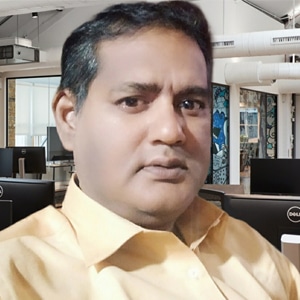
Prof. Dr. Algimantas Venčkauskas Department of Computer Science, Kaunas University of Technology, Lithuania

Department of Information Systems, The Faculty of Fundamental Sciences, Vilnius Gediminas Technical University, Lithuania

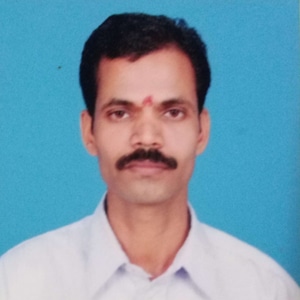
Prof. Dr. Habil Genadijus Kulvietis Department of Information Systems, The Faculty of Fundamental Sciences, Vilnius Gediminas Technical University, Lithuania

Faculty Member - Department of Computer Science Patna Women's College, India

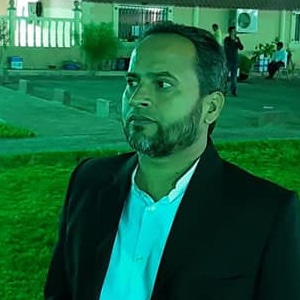
Dr. Ajit Singh Faculty Member - Department of Computer Science Patna Women's College, India

Assistant professor, R. V. Government Arts College, India

Dr. K. P. Sanal Kumar Assistant professor, R. V. Government Arts College, India

Department of Computer Science & Engineering, Sipna College of Engineering & Technology, India

Dr. Aashish A.Bardekar Department of Computer Science & Engineering, Sipna College of Engineering & Technology, India

College of Computer Engineering and Sciences, Prince Sattam Bin Abdulaziz University, Saudi Arabia

Dr. Sultan Ahmad College of Computer Engineering and Sciences, Prince Sattam Bin Abdulaziz University, Saudi Arabia

Department of Statistics, Bharathiar University, India

Dr. S. Gandhiya Vendhan Department of Statistics, Bharathiar University, India

Department of Science Faculty of Fundamental Sciences, Vilnius Gediminas Technical University

Doc. Dr. Nikolaj Goranin Department of Science Faculty of Fundamental Sciences, Vilnius Gediminas Technical University

Department of Systems, Faculty of Electronic Engineering and Telecommunications, Universidad del Cauca, Colombia

Dr. Cesar Alberto Collazos Department of Systems, Faculty of Electronic Engineering and Telecommunications, Universidad del Cauca, Colombia

Department of Computer Science, School of Engineering, Amrita Vishwa Vidyapeetham University, India

Dr. Rimjhim Padam Singh Department of Computer Science, School of Engineering, Amrita Vishwa Vidyapeetham University, India

征稿主题 Call for Paper

Conference Themes and Topics

image processing conferences 2022

The Global Conference on Advanced Research in Image Processing will provide an excellent international platform for sharing knowledge and results in theory, methodology, and applications impacts and challenges of Image Processing. The conference discusses practical and theoretical results which make a fundamental contribution to the development of Image Processing. The aim of the conference is to provide a platform for researchers and practitioners from both academia as well as industry to meet and share cutting-edge development in the field. Original research papers, state-of-the-art reviews are invited for publication in all areas of Image Processing Development.

The Image Processing Scientific Committee

  • Image Processing & Segmentation
    3D Reconstruction of Underwater Scenes
    Action Recognition
    Adaptive Filters
    Adaptive Signal Processing
    Array Signal Processing
    Autonomous Robots
    Decoupled Active Contours
    Disparate Scene Registration
    Document Image Processing
    Filter Design and Structures
    Filtering and Multiresolution Processing
    Grid Seams
    Image Acquisition Techniques
    Image Analysis, Detection and Recognition
    Image Coding and Compression
    Image Denoising
    Image Enhancement
    Image Formation
    Image Manipulation
    Image Processing Applications
    Image Processing for Cultural Heritage
    Image Processing for Geophysics
    Image Processing for Public Health and Safety
    Image Retrieval
    Image Scanning, Display, and Printing
    Image-Based Modeling
    Image-Based Rendering
    MAGIC System
    Multi-channel Filtering
    Multiple Filtering and Filter Banks
    Pattern Recognition
    Radar Image Processing
    Salient Region Detection
    Sonar Image Processing
    VIP-Sal
    Volumetric Imaging
    Web Graphics
  • Biomedical Imaging
    Bias Field Correction in Endorectal Diffusion Imaging
    Biological Image Processing
    Biomedical Imaging New and Emerging Applications
    Biomedical and Assistive Technology
    Biometrics, Forensics, and Security
    COVID-19 and Imaging
    Cancer Detection
    Computed tomography
    Correlated Diffusion Imaging
    Enhanced Low-dose Computed Tomography
    Magnetic resonance imaging
    Medical Image Analysis
    Medical Image processing
    Multiplexed Optical Interferometry
    Optical coherence tomography
    Photoplethysmographic Imaging
    Position emission tomography
    Skin Cancer Detection
    Ultrasound
  • Computer Vision
    2D sensors
    3D Modeling and Visualization
    3D Shape and Structure Analysis
    Artificial intelligence
    Augmented reality
    Biological vision
    Controlling processes
    Creating biological models
    Digital photography
    Face Recognition
    Face and Gesture
    Mathematical modeling, statistics and probability
    Miovision
    Object Recognition
    Optimization
    Robot navigation
    Tracking objects
    Tracking vehicles
  • Video Analysis
    Animation and Motion Capture
    Digital Video
    Image & Video Processing
    Motion Detection
    Motion Estimation, Registration and Fusion
    Motion and Tracking Stereo and Structure from Motion
    Motion and Video Analysis
    Multi-Spectral Imaging
    Multidimensional Signal Processing
    Multimedia
    Video Analysis & Understanding
    Video Analysis and Event Recognition
    Video Analysis and Segmentation
    Video Coding and Transmission
    Video Labeling and Retrieval
    Video Perception and Quality Models
    Video Quality Models
    Video Signal Processing
    Video Storage, Retrieval, and Authentication
    Video Surveillance and Monitoring
    Video Systems and Applications
    Visual Special Effects
    Visualization
  • Image Processing Algorithms
    Adaptive and Clustering Algorithms
    Blurring, Edge Detection and Embossing
    Brightness Correction
    Color, Multispectral, and Hyperspectral Imaging
    Contouring and Image Sharpening
    Contrast Enhancement
    Digital Image Detection
    Fast Algorithms
    Hierarchical Algorithms
    Hierarchical Models
    Illumination and Reflectance Modeling
    Image Data Compression
    Image Enhancement
    Image Quality Estimation
    Image Reconstruction
    Image Restoration
    Image compression
    Image denoising
    Markov decomposition
    Multigrid methods
    Multiresolution Techniques
    Remote Sensing
    Resolution and Noise
    Spectral Image Estimation
    Wavelet Methods
  • Scientific Imaging
    Acoustic Imaging
    Artificial Intelligence (AI)
    Biomaterials
    Computational Modeling
    Computed Tomography (CT)
    Drug Delivery System
    Image-Guided Robotic Interventions
    Magnetic Resonance Imaging (MRI)
    Nuclear Medicine
    Stochastic Models
  • Deep Intelligence
    Deep Learning
    Discovery Radiomics
    Internet of Things
    Machine Learning
    Natural Language Processing
    Recommender Systems
    Reinforcement Learning
    Sports Analytics
    Tumor phenotype
  • Further Topics
    Content-Based Image Retrieval
    Cyclo-stationary Signal Analysis
    Higher Order Statistical Analysis
    Interpolation, Super-resolution, and Mosaicing
    Interpretation and Understanding
    Knowledge Representation and High-Level Vision
    Multi view Geometry and 3D Computer Vision
    Optical Signal Processing
    Perceptual Grouping
    Performance Evaluation
    Real Time Signal Processing
    Restoration and Enhancement
    Satellite Data Analysis and Interpretation
    Shape Representation
    Signal Identification
    Signal Reconstruction
    Software Languages and Tools for Imaging
    Spectral Analysis
    Super-resolution imaging
    Synthesis, Rendering, and Visualization

Submission Guidelines

To facilitate the submission process and the subsequent follow-up process, please consider the following guidelines, information, tips, terms and deadlines mentioned.

In order to submit a paper, an author is required to create an online account on the conference website. Only manuscripts submitted via the online submission system will be considered for review. To upload your submission, first register as an “Author” by filling in the “Author” registration. Once your account is created, you can log in by the assigned Username and Password and then you will be able to upload your submission (Abstract/full paper) using the “New Submission” button. With the online submission management system, you will be able to track the review process by logging into your account.

Abstract submission Guidelines
  • The acceptable word range for the abstract is 175 – 275 words. The abstracts which do not meet this word limit will be asked for revisions.
  • Please download the abstract template and follow the format carefully.
  • Your submission should be submitted in English.
  • We encourage you to send informative abstract (complete abstract) which is a compendious summary of a paper’s substance including its background, purpose, methodology, results, and conclusion
  • Please send in a brief biography together with the Abstract. eats for the conference.
Getting Tour Full Paper Published
  • Download the Full Paper Template for proceedings and read guidelines.
  • Prepare your manuscript in English. Please ensure that your manuscript does not contain grammatical and language errors
  • All third party work included in your paper should be properly acknowledged with referencing
  • The manuscripts should be submitted as an MS Word document in .doc format (not as a PDF or .docx format) with other supporting documents as requested in call for paper email
  • Send your paper to the related conference on or before the deadline
出版信息 Publication

All papers will go through the double-blind peer-review process and are expected to meet the criteria outline by the journal You may ask to revise the paper and submit it back on or before the stated deadline Acceptance or non-acceptance of the paper is solely in the hands of the editorial board For further details on publication contact Head of Publications at image processing conferences.

All accepted papers will be published in the conference Proceeding with ISBN Number. All full papers sent for conference proceedings will be accepted through a double-blind review process and will be published electronically in proceedings with a DOI number.


Plagiarism Policy & Publication Ethics

The Global Conference on Advanced Research in Image Processing follows strict anti-plagiarism policies. As such, every submission is checked for plagiarism using Crossref Similarity Check Powered by iThenticate. All articles submitted to the conference first undergo a plagiarism check before being sent to our scientific committee for review. The submission will be automatically rejected at any time if found plagiarized. You can find out more about the iThenticate software here:  https://www.crossref.org/services/similarity-check/


Indexing Support

Conference proceedings will be submitted to renowned indexing databases like Thomson Reuters, SCOPUS and Google Scholar for possible Indexing.

主讲嘉宾

主讲嘉宾

Guest Speaker
会议标签
为您推荐
一起来互动吧!
0 / 300
全部评论(--
张三:
commentContent
2022-8-30 9:00:00
回复
昵称1:
replyContent
2022-8-30 10:00:00
回复
距会议开幕还有
00
00
00
00